03 / ENGINEERED FOR YOUR ENVIRONMENT
Connected to the factory. Join inspection, process history and site workflows. Keep an investigation separate from the authority to change a process or release work.
Manufacturing / INTEGRATION STUDY ILLUSTRATIVE ARCHITECTURE
EXISTING SOURCES CUSTOM WORKSPACE CONTROLLED HANDOFF SCOPED ACCESS · SOURCE CONTEXT · TRACEABLE WORK Inspection evidence Lot & tool history Asset telemetry INVESTIGATION DESK Lot / event context REVIEW RECEIVING SYSTEM MES / CMMS / quality REVIEW BEFORE RELEASE CONNECT THE AUTHORIZED SOURCES Inspection evidence Lot & tool history Asset telemetry SCOPED ACCESS YOUR SYSTEMS · YOUR ACCESS RULES 01/ 04 Start inside your environment. Connect inspection evidence, lot & tool history, asset telemetry through interfaces and access rules agreed for your project.
WHAT PASSES FORWARD Authorized sources & interfaces
01 Connect 02 Preserve context 03 Review 04 Handoff
Approval before intervention Engineering teams approve process changes and maintenance actions.
Respect the site boundary Operational integrations respect site controls and existing machine safety systems.
REFERENCE UNDER REVIEW CHECK AGAINST AGREED REFERENCES Evaluate the actual task Evaluate by defect class, asset, failure mode and the actual investigation task.
VALIDATE THE WORK THAT MATTERS
Agree the standard. Build the evaluation around your actual task, representative inputs and specialist review.
How we engineer and evaluate PROJECT ACCEPTANCE / Manufacturing ILLUSTRATIVE
01 False-alert burden02 Defect-class performance03 Evidence coverage04 Useful warning time
WHAT WE CHECK False-alert burden Review alerts against representative operating cases.
Criteria and thresholds are agreed for your project. This is a process illustration, not a performance score.

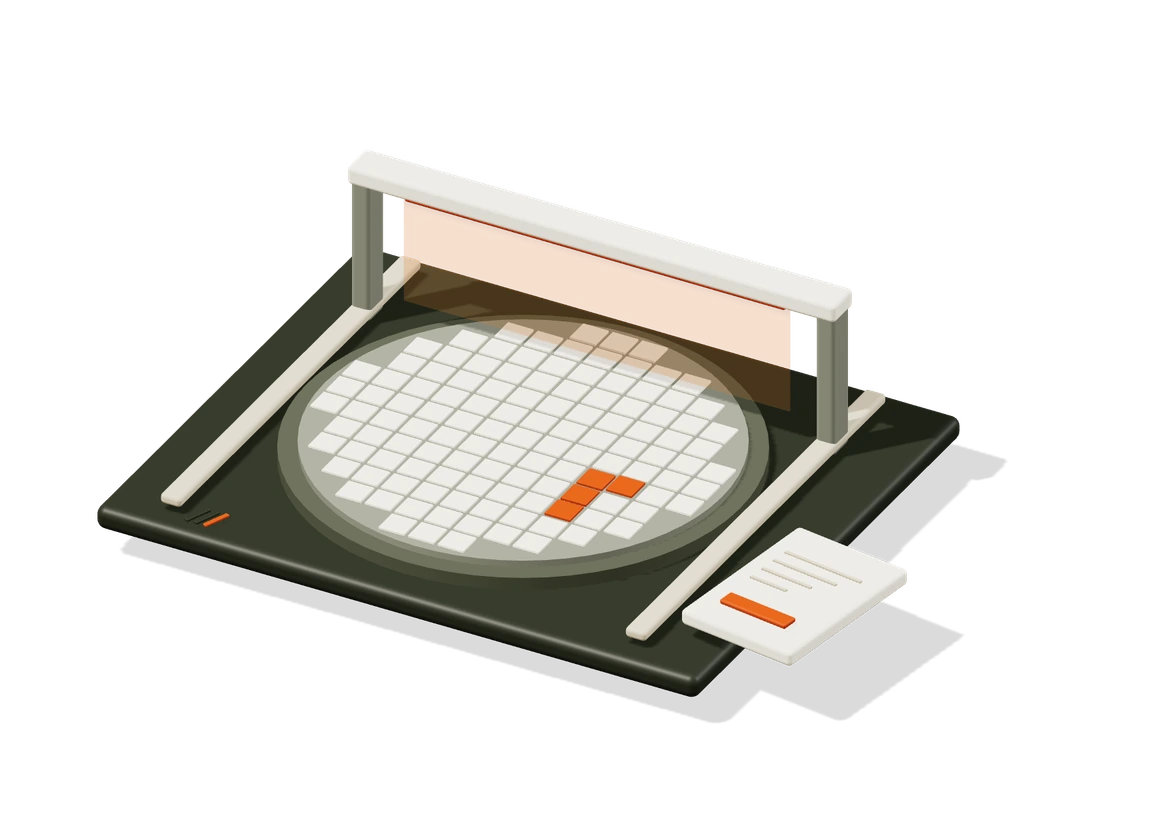
Make the exception visible.
Localize a spatial pattern in inspection data and preserve the original evidence.